Maria Montessori, the first special education teacher
The origins of a pedagogy designed for “different” children.
Before becoming one of the most influential approaches to education in the world, the “Montessori method” grew out of a deep conviction: every child has an innate ability to learn, as long as they are given a suitable environment and suitable tools.
A doctor who cared about the children school could not support
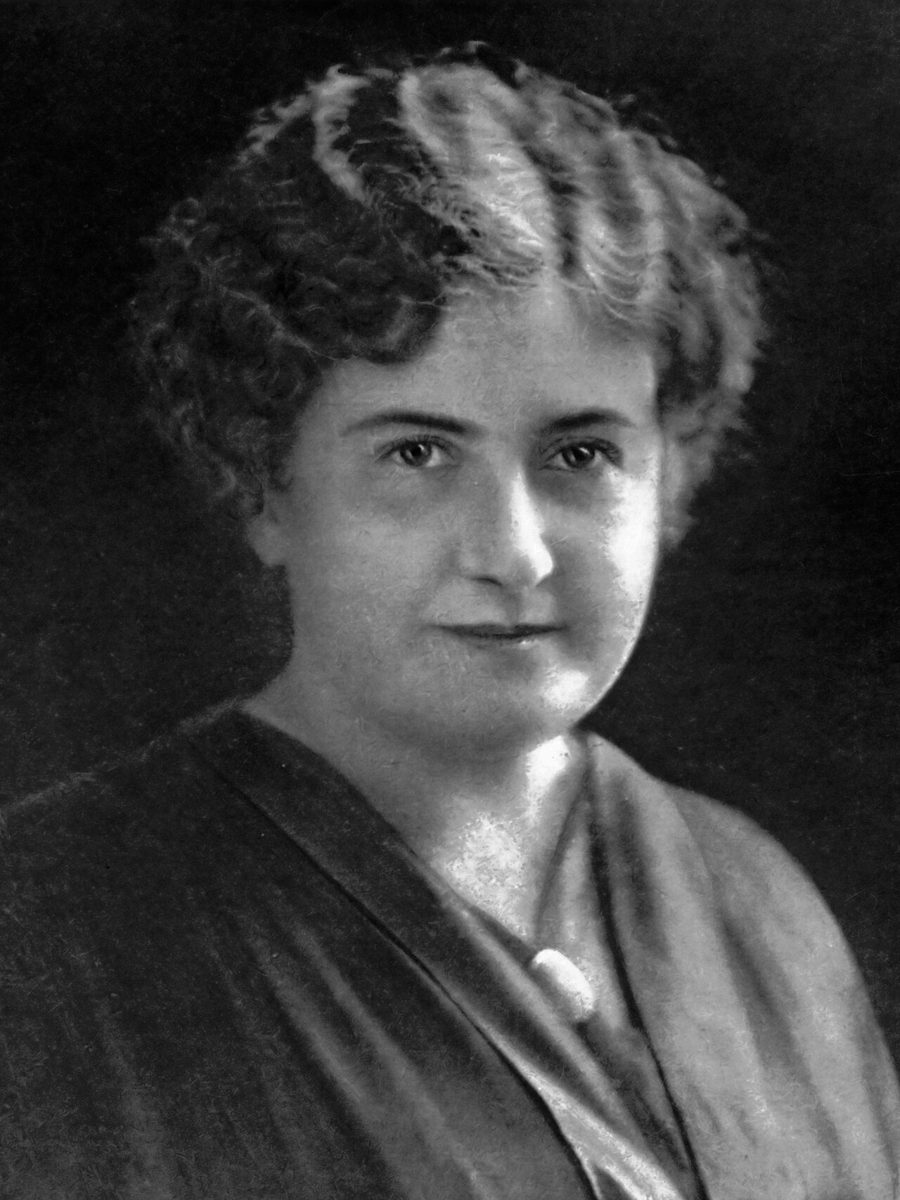
Maria Montessori was born in Italy in 1870. She was among the very first women to qualify as a doctor in Italy, and early on she took an interest in children with developmental disorders and learning difficulties.
At the end of the 19th century, these children were often considered unable to learn, and were given labels that would be seen as deeply offensive today: “stupid”, “idiots”…
In 1897, while working at the psychiatric clinic of the University of Rome, Maria Montessori was struck by the living conditions of the children placed in institutions. She noticed in particular that they lacked stimulation, activities and opportunities to explore their surroundings.
In 1900, she became co-director of the Orthophrenic School of Rome, an institution devoted to educating children with intellectual disabilities and various developmental disorders.
There she tried out her first teaching approaches, based on the writings and ideas of two French doctors who pioneered special education: Jean Itard and Édouard Séguin.
Maria Montessori went further. She observed the children, analysed their reactions, adapted the activities and developed teaching materials to work on sensory perception, motor skills, coordination and basic learning.
She then grasped what would become the guiding principle of her whole philosophy: children learn when they become active in their own learning.
Her approach rests on several principles:
- hands-on learning: learning by touching, moving, experimenting and doing;
- sensory stimulation: using the senses to build understanding step by step;
- individualisation: adapting activities to each child’s needs and abilities;
- repetition: letting the child start again, practise and progress at their own pace;
- independence: giving the child the chance to act, to search and to succeed on their own.
So what links Maria Montessori to today’s special education teachers?
Today, the special education teacher is a well-known profession.
What do they do? Depending on the specialised class they work in, they observe their students and then ADAPT learning to the special educational needs of the children in their class or setting.
Students’ profiles are many and varied: cognitive difficulties, very often specific learning disorders such as dyslexia, dyscalculia or dyspraxia, ADHD (attention deficit hyperactivity disorder), autism spectrum disorder…
But wait a moment! Observe, analyse, then ADAPT? That is exactly the Montessori method, especially when hands-on materials are needed to make learning concrete.
Students with special educational needs above all need to learn through concrete experience, and therefore through manipulation. And Montessori education is built around hands-on materials for language, mathematics and science.
In 1907, Maria Montessori opened her first Casa dei Bambini, the Children’s House, in the working-class district of San Lorenzo in Rome. There she brought some of the tools and principles she had tested with disabled children into a learning environment for all young children.
In conclusion: Montessori and neurodiversity, a vision that is still relevant
Today we use words that did not exist in Maria Montessori’s time: neurodiversity, neurodevelopmental disorders, autism, ADHD, specific learning disorders. It would be anachronistic to credit her with today’s medical knowledge and classifications.
Yet her work strongly echoes the challenges of inclusive education today. She had understood something essential: not all children perceive, process and build their learning in the same way. Some need repetition, others need visual supports, concrete materials, stable routines or an adapted environment.
More than a century later, the Montessori legacy is immense, and schools bearing her name can be found all over the world.
Very early on, the Italian educator understood that ALL children must be cared for, especially those with special educational needs. Her experimental method achieved remarkable results, which makes Maria Montessori arguably the first, or at least one of the first, special education teachers.